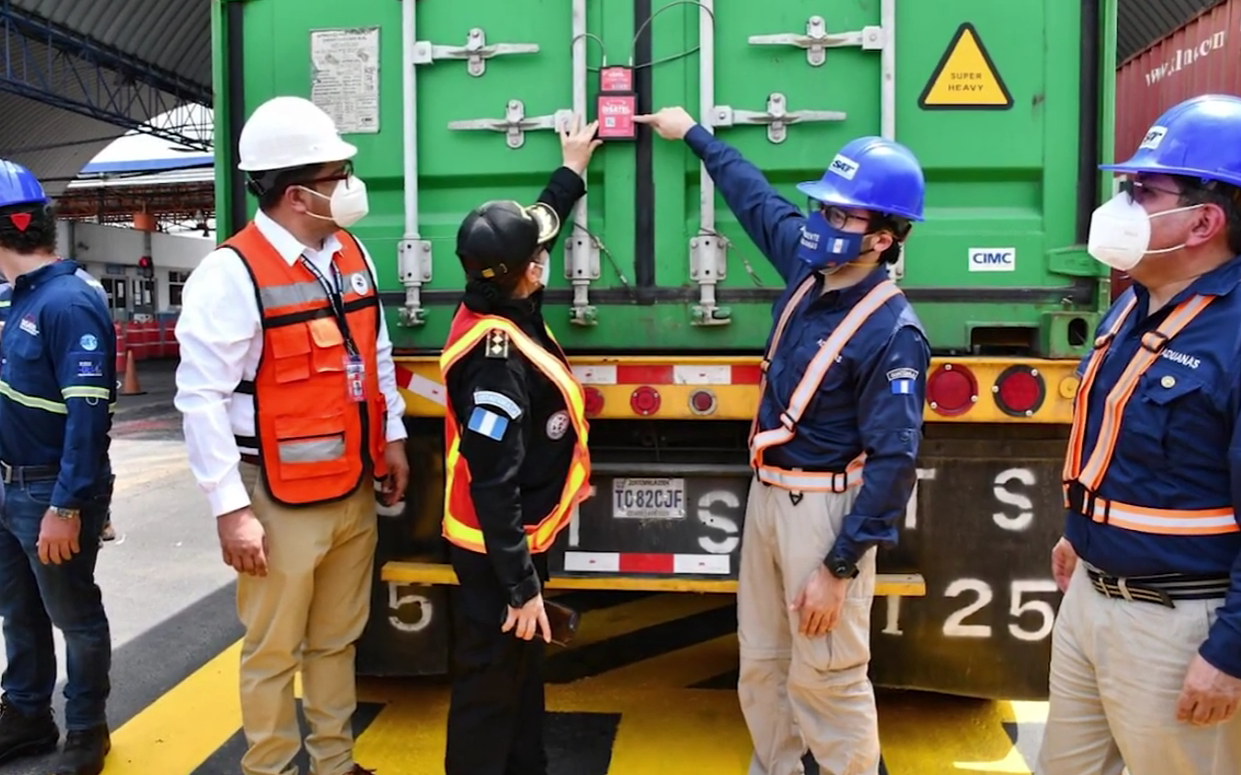
National ECTS Deployment Enables End-to-End Cargo Visibility Across Guatemala
As international trade continues to expand across Central America, customs authorities face growing pressure to secure transit cargo without slowing legitimate trade. Guatemala has addressed this challenge by deploying a nationwide Electronic Cargo Tracking System (ECTS), creating a connected supervision model that combines smart electronic seals, GPS monitoring, and customs system integration.
Developed for Guatemala's Superintendency of Tax Administration (SAT), the project demonstrates how digital technologies can replace fragmented, manual supervision with continuous cargo visibility, intelligent risk control, and more efficient customs operations.
Project Snapshot
Customer
Superintendency of Tax Administration (SAT)
Country
Guatemala
Industry
Customs Administration • Transit Supervision • Border Security • Revenue Protection
Core Application
- Transit cargo monitoring
- Customs anti-smuggling enforcement
- Cross-border cargo security
- Protection of customs revenue
- Trade facilitation
Integrated Technologies
- National Electronic Cargo Tracking System (ECTS)
- Smart GPS electronic seals
- Real-time monitoring platform
- DUCA customs declaration integration
- Customs risk management mechanisms

The Challenge: Maintaining Customs Control Beyond the Border
Guatemala serves as one of Central America's key logistics corridors, connecting international ports with inland customs facilities and neighboring countries.
While cargo entering the country could be inspected at ports or border checkpoints, maintaining visibility throughout the transit journey remained difficult. Once trucks departed the initial customs checkpoint, authorities had limited information about the cargo's status until it arrived at its declared destination.
This lack of continuous supervision increased exposure to several operational risks:
- Unauthorized unloading during transit
- Cargo replacement or tampering
- Smuggling activities
- Revenue loss caused by transit fraud
- Heavy reliance on manual inspections
- Longer clearance times and operational bottlenecks
Conventional mechanical seals could only indicate whether a container had been opened. They provided no information about cargo location, transport behavior, or compliance with approved transit routes.
For modern customs administrations managing high cargo volumes, this approach no longer met operational requirements.
Building a Digital Customs Transit Network
To improve cargo security without disrupting trade, Guatemala implemented a nationwide ECTS platform that digitally connects cargo, vehicles, customs declarations, and supervisory authorities throughout the entire transit process.
Instead of relying solely on physical inspections, customs officers can now monitor shipments continuously through a centralized digital platform.
Smart Electronic Seals Become the Digital Identity of Cargo
Every monitored container or trailer is secured using GPS-enabled electronic seals capable of reporting cargo status throughout transportation.
Each seal supports:
- Continuous GPS positioning
- Electronic tamper detection
- Door opening alerts
- RFID authorization management
- Complete transportation history
Rather than functioning only as a physical locking device, the electronic seal continuously reports the operational status of each shipment, allowing customs authorities to verify cargo integrity in real time.
Real-Time Monitoring Supports Immediate Risk Response
All transportation data is transmitted to the national ECTS monitoring platform, where customs personnel gain live operational visibility across the transit network.
Key supervisory capabilities include:
Digital Route Control
Approved transportation corridors are predefined within the system.
If a vehicle leaves its authorized route, remains stationary beyond permitted limits, or exhibits abnormal movement patterns, the platform automatically generates alerts for customs officers.
Controlled Digital Release
Electronic seals can only be unlocked after authorization at designated customs checkpoints, bonded warehouses, or approved destinations.
This digital authorization mechanism establishes a trusted chain of custody throughout transportation while reducing opportunities for unauthorized cargo access.
Connecting Cargo Movement with Customs Declarations
A defining feature of Guatemala's deployment is the integration between the ECTS platform and the DUCA customs declaration system.
By linking operational data with customs documentation, authorities obtain a unified digital view of each shipment, including:
- Declaration information
- Cargo identity
- Approved transport route
- Electronic seal status
- Historical transportation records
Instead of comparing multiple independent systems, customs officers can review both physical cargo movement and declaration data within a single operational environment, enabling faster verification and more informed enforcement decisions.
From Manual Inspection to Data-Driven Customs Supervision
The implementation of ECTS represents more than a technology upgrade—it reflects a shift in the customs operating model.
Previously, supervision depended largely on paperwork, escort procedures, and random inspections.
Today, customs officers work with real-time transportation intelligence supported by automated alerts, digital evidence, and risk-based inspection strategies.
Routine cargo can move more efficiently, while enforcement resources are focused on shipments exhibiting abnormal behavior.
Operational Benefits
Improved Customs Revenue Protection
Continuous cargo monitoring helps prevent illegal unloading, cargo substitution, and other transit violations that may result in customs revenue losses.
Greater Trade Efficiency
Because compliant shipments can be monitored digitally, customs authorities can reduce unnecessary physical inspections, contributing to smoother cargo movement across national transit corridors.
End-to-End Transportation Visibility
From port departure to inland customs facilities, every shipment remains visible throughout the transit journey, significantly improving operational transparency.
Stronger Anti-Smuggling Capabilities
Electronic seal events, GPS history, and transportation records create reliable digital evidence that supports customs investigations and strengthens anti-smuggling enforcement.
A Reference Model for Customs Modernization in Latin America
Guatemala's ECTS deployment illustrates how customs modernization extends beyond installing GPS devices or electronic seals.
The project establishes an integrated digital supervision ecosystem where trusted sensing technologies, customs declarations, and operational intelligence work together to improve compliance while facilitating legitimate trade.
Its successful integration with the DUCA regional declaration framework also provides valuable experience for future digital customs initiatives across Central America.
Jointech's Perspective
Around the world, customs administrations are moving toward intelligent supervision models that rely on continuous data rather than isolated checkpoints.
Based on extensive project experience across Africa, Europe, the Middle East, and Asia, Jointech believes future customs modernization will continue to evolve around three strategic pillars:
Trusted Digital Sensing
Smart electronic seals convert physical cargo into continuously verifiable digital information.
Seamless System Integration
Modern ECTS platforms should integrate with customs declarations, national single windows, risk management systems, and other regulatory platforms to establish unified operational workflows.
AI-Driven Customs Intelligence
The next stage of customs digitalization will combine artificial intelligence with real-time transportation data to support predictive risk assessment, anomaly detection, and intelligent decision-making.
Frequently Asked Questions
What is an Electronic Cargo Tracking System?
An Electronic Cargo Tracking System (ECTS) is a customs supervision solution that combines GPS-enabled electronic seals, communication networks, and centralized monitoring software to provide continuous visibility of transit cargo.
How does ECTS reduce smuggling risks?
The system continuously monitors cargo movement and detects events such as unauthorized door opening, route deviations, abnormal stops, and transportation anomalies, allowing customs authorities to respond before violations escalate.
Why integrate ECTS with customs declarations?
System integration links cargo movement with official declaration data, improving cargo verification, risk analysis, and enforcement efficiency while reducing manual processing.
What distinguishes Guatemala's ECTS implementation?
Its integration with the DUCA customs declaration framework creates a unified supervision model that connects declaration information with real-time transportation data, providing customs officers with comprehensive operational visibility.


 Your message must be between 20-3,000 characters!